


A Brief History of Color Analysis

Color analysis can be traced back more than a century ago in the face of Albert Munsell, though I would only attribute the theory of the three main planes of measuring color. That would be hue (color family), chroma (intensity) and value (lightness). This isn’t a direct ancestor of color analysis, but it’s the backbone of modern understanding of color harmony. His system makes it visually easy to understand why some colors clash, based on their characteristics, while others fit together perfectly. (see figure on the left)

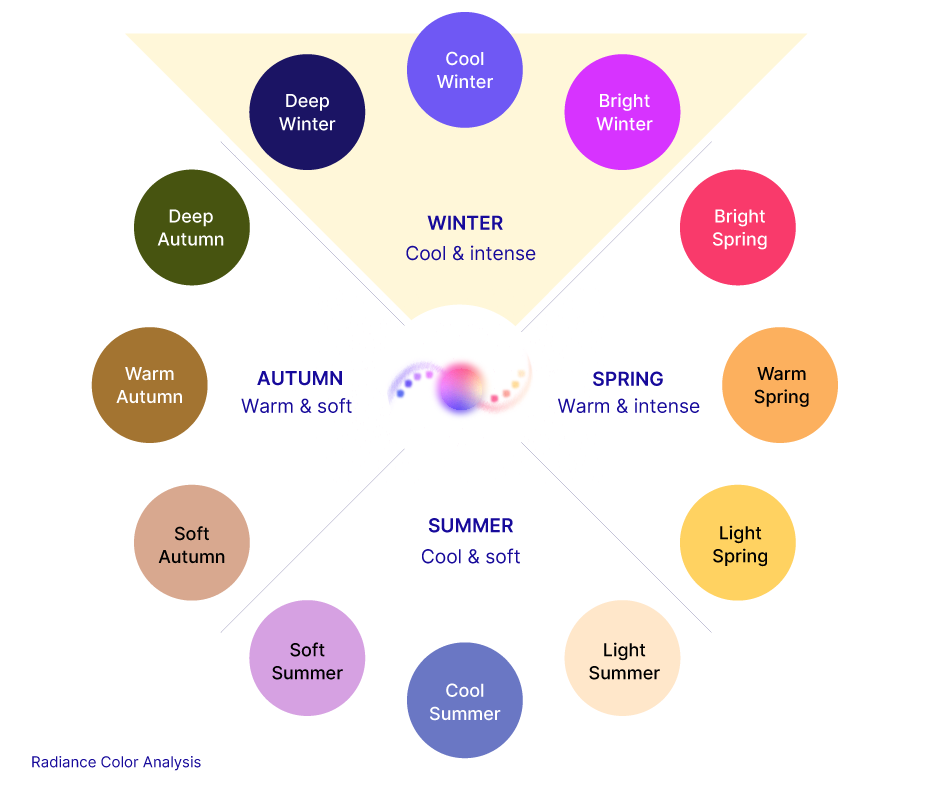
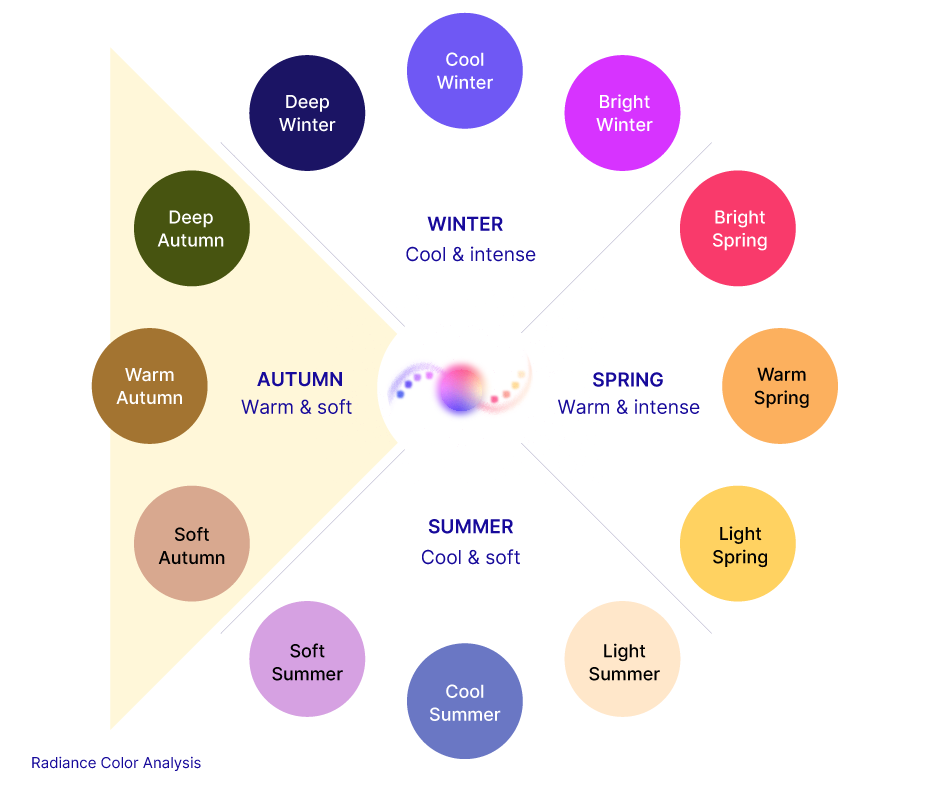
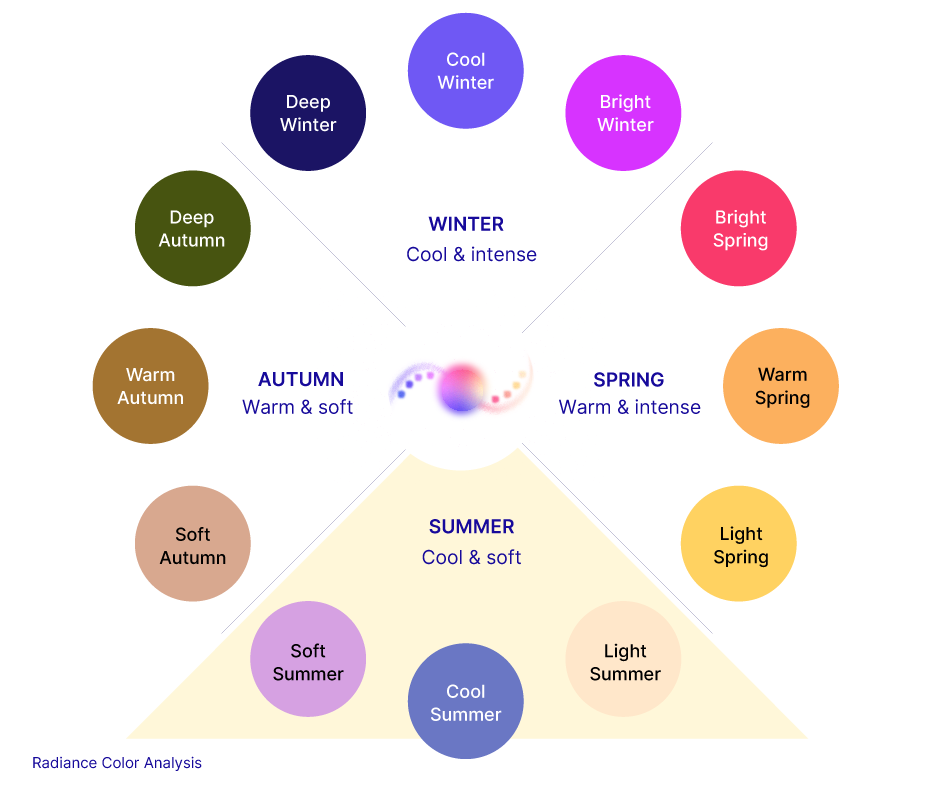
It’s worth mentioning that another brilliant mind, Johannes Itten, has his own contribution to the development of color analysis. During his studies in Bauhaus, he noticed that his students gravitated towards using palettes similar to their own natural coloring. He described these as the earthy tones of autumn, or cool soft tones of summer. He called this his color aesthetic theory. (see figure above)
Itten’s work would later inspire minds such as Hollywood artist Robert Dorr, who noticed that stars would look radiant some days, while they’d look tired on others. He used Itten’s theory of color grouping to determine which groups would have this effect on the skin.

Suzanne Caygill also used her expertise to develop this system further, believing each individual had a personal color essence. She used the same idea of matching people to the characteristics of the colors of each season, with her work recognizing the subtle nuances of each season, which would inspire the 12 seasonal system.
Springs were: Light, warm, and fresh.
Summers were: Cool, soft, and muted colours
Autumns were: Rich, warm, and earthy tones
Winters were: Cool, deep, and highly contrasted colours.

The next pioneer in the color analysis space was Carole Jackson, who popularized the ideas of color analysis in the 80s with her bestselling book “Color Me Beautiful.” She focused on making color analysis easy to understand by the general public, although that has its downside of oversimplifying the topic. She focused on the four seasons based on skin, hair and eye color. (see image left)
Later came the development of the 12-season and 16-season color analysis, which added a more personalized and refined look on color types, with a focus on color temperature, and an additional neutral leaning subgroups to accommodate those who do not fall perfectly into the two ends of the spectrum.
Nowadays, with social media giving color analysis a moment of popularity, there is an increased interest in getting a professional color analysis, and it is more accessible for clients to find their match for an analyst.
I will discuss what to look for in a color analyst and all the questions you should ask before making the investment.
Comments